AI Tool Consultant

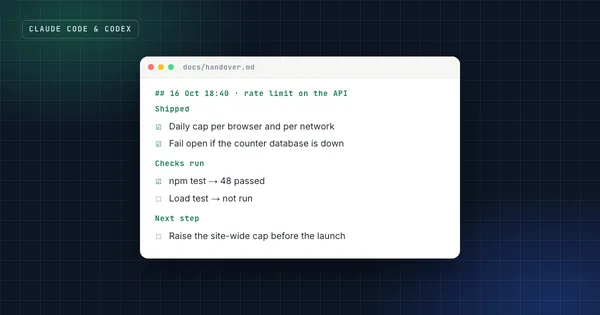
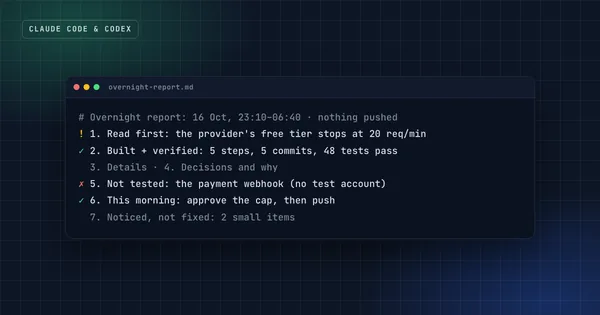
I pay for both of these at the same $20 tier: Claude Code through Claude Pro, Codex through ChatGPT Plus. Since spring 2026 I've used them on the same products, sometimes on the same day, and my laptop keeps the records: session logs, commit trailers and the handover notes my projects write at the end of every session. This page is built from those records, the vendors' own documentation and two public benchmarks.
The short answer
- Pick Claude Code if you'll spend long sessions building inside one repository. It leads both coding boards I checked on 1 November 2026, and in my own work it became the main builder. On Claude Pro, plan around a 5-hour session limit; Max ($100) gives five times the usage.
- Pick Codex if you already pay for ChatGPT, want commands sandboxed by default, or want a second opinion on code another agent wrote. On ChatGPT Plus, pick the model with care: OpenAI's own estimate for its frontier model is 5 to 45 local messages per five hours.
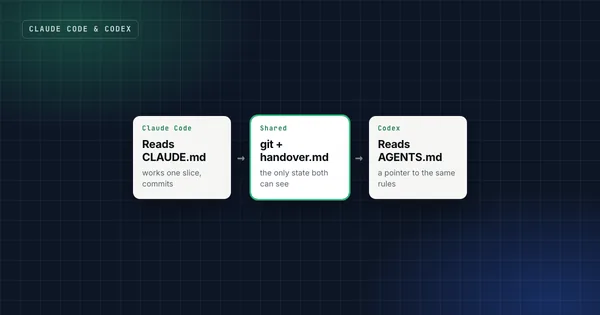
- Use both if limits keep stopping you. One repository can serve both agents with a shared rulebook and a handover file, and the second agent makes a good reviewer.
Quick decision guide
| If you... | Pick | Why |
|---|---|---|
| Already pay for ChatGPT Plus and code a few hours a week | Codex | It's in your plan already. GPT-6.1 Sol stretches the allowance about three times further than GPT-6 Astra.5 |
| Build for hours at a stretch in one repository | Claude Code | It leads Terminal-Bench 4.0 and arena.ai's WebDev board, and it became the lead builder on my product.10 12 |
| Want commands sandboxed without setting anything up | Codex | Its OS-level sandbox and network block are on by default. Claude Code asks before acting, and its sandbox is opt-in.7 8 |
| Mostly want a reviewer for code you or another agent wrote | Codex | That's where it earned its place in my projects (see below). |
| Hit the 5-hour limit most days | Upgrade, or run both | Both $20 plans ran out for me in October. The next tier is $100 on both sides.1 5 |
| Don't write code yourself and direct agents in plain English | Either, after setting up the repository | A rulebook, a handover file and a session-start check matter more than the agent. |
Claude Code vs Codex at a glance
| Claude Code | Codex | |
|---|---|---|
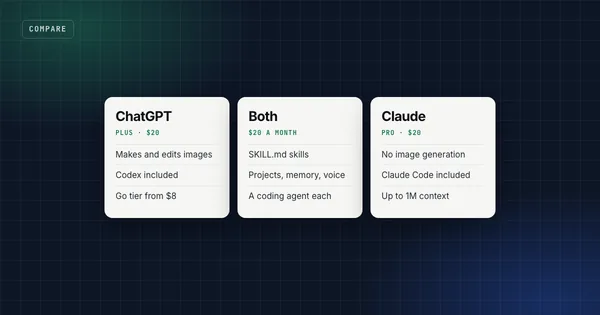
| Entry plan | Claude Pro: $20 a month, or $17 a month billed annually1 | ChatGPT Plus: $20 a month5 |
| Next tiers | Max $100 and Ultra $200 a month1 | Pro at $100, $200 or $500 a month5 |
| Models (November 2026) | Opus 5.5, Sonnet 5.5 and Haiku 5.5; Fable 5.1 on Pro only through usage credits1 | GPT-6.1 Sol and GPT-6 Luna on Plus; OpenAI's usage table also lists GPT-6 Astra and GPT-6.1 Terra5 |
| Limits on the $20 plan | A 5-hour session limit and a weekly limit, shared with the Claude apps. No message estimate published.2 | Estimated local messages per five hours, by model: 5 to 45 for GPT-6 Astra, 15 to 160 for GPT-6.1 Sol. Weekly limits may apply.5 |
| When you run out | Wait, buy usage credits, or switch to API billing2 | Wait, buy ChatGPT credits, or use an API key5 |
| Where it runs | Terminal, VS Code and JetBrains, desktop app, web, mobile, Slack3 | CLI, IDE extension, desktop app, web, iOS, Slack5 |
| Project rulebook | CLAUDE.md, or a repository's AGENTS.md4 | AGENTS.md6 |
| Skills, MCP, subagents, hooks, plugins | All five3 | All five9 |
| Safety default | Asks before edits and commands; the sandbox stays off until you turn it on7 | An OS-enforced sandbox with network access off, plus an approval policy8 |
| Headless runs | claude -p3 | codex exec9 |
| Terminal-Bench 4.0, best run | 64.8% ± 3.1% with Opus 5.510 | 58.2% ± 2.8% with GPT-6 Astra, 58.2% ± 3.1% with GPT-6.1 Sol10 |
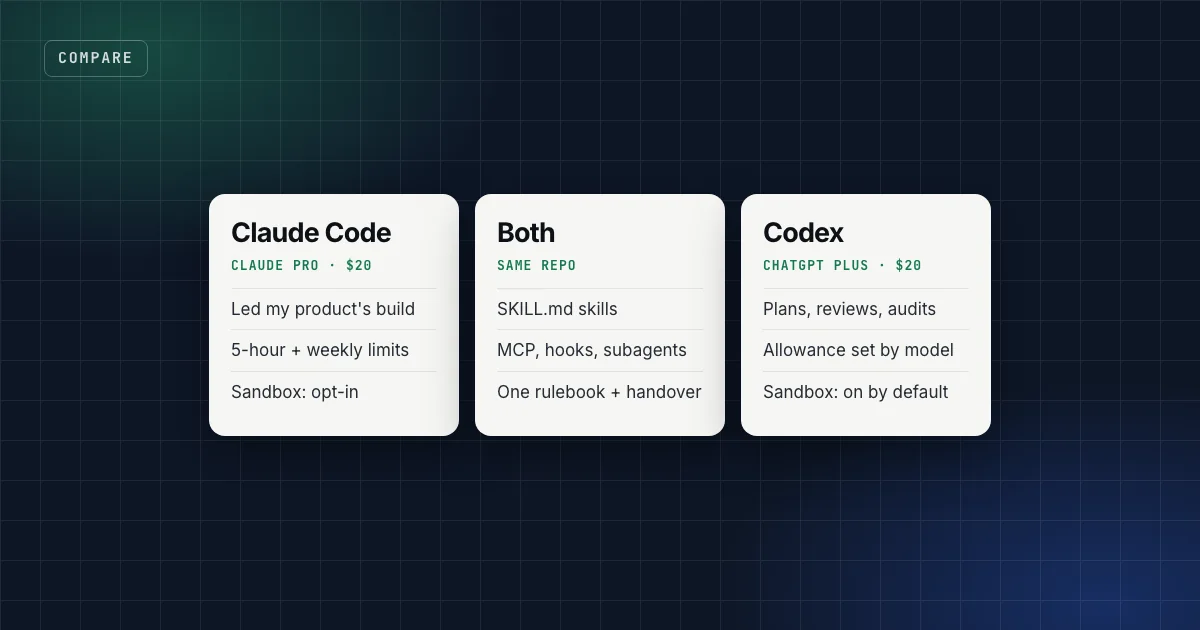
The feature rows are close to a draw now: both read the same SKILL.md skills, both speak MCP, both run subagents and hooks. What separates them is the plan you already pay for, how its limits behave, the safety default, and how well each model handles your kind of work.
How I use both
What my records from spring to November 2026 show:13
- Claude Code: most of my sessions are on myberuf, almost all with Opus 5.5 lately, and nearly every commit in that repository in October carries Claude's co-author line.
- Codex: spread across my own products, coursework and exam prep, my Master's research, German and French practice, and work. Most ran on GPT-6 Astra at high reasoning. Codex didn't add a co-author line to its commits in my repositories, so git alone can't show its share of the coding.
The split wasn't planned; it settled. Codex wrote myberuf's development plan and its first batch of work on 7 October. From that afternoon, at my request, Claude Code led development and Codex took reviews: a read-only review on 9 October, then a full audit with a UX follow-up on 10 October, both of which changed what Claude Code built next. On 13 October I split the work into two products: myberuf stayed with Claude Code, and Conversation Coach, a broader spin-off, went to Codex in its own repository.
What these records can't show
Session counts depend on what each tool keeps on disk, and my habits aren't a controlled experiment. Read them as one person's pattern, not a measurement of either tool.
When both worked on the same feature
The closest thing to a head-to-head in my records happened on 9 October 2026, on a myberuf batch called "feedback you can trust". Codex ran GPT-6 Astra, Claude Code ran Opus 5.5.11
- Codex reviewed the app, read-only, and listed six findings that should decide the build order, each with file references. Among them: corrections the model itself marked as uncertain were still stored as the learner's mistakes, a failed check could show "No mistakes found", and the results page could pair a call with another learner's answer.
- Codex started the fixes that evening, with 14 new tests, and left them uncommitted.
- Claude Code finished the batch after my OK, and changed three behaviours before committing:
- Codex counted overlapping corrections as a failed check. With the local model those overlaps were routine (3 of 14 answers), so whole answers would have been kept out of the learner's mistake memory.
- Codex's revision round needed up to 12 words on each side of a gap to match word for word, so most spoken answers failed.
- Another mistake of the same kind could override the corrected wording in a call's verdict.
- The check that decided it ran in a real browser: a computer voice spoke two answers into the app and local Whisper transcribed them. Codex's version answered "not yet" to both. The finished version recognised the right word order "from memory", despite a misheard company name.
The unit tests passed in both versions. Only real answers through the real model showed the difference, and that's now a rule in my repository: run a few real answers through the model before changing these checks. And credit where it's due: Codex's review found the problems in the first place, and four of its six findings were fixed that night.
Claude Code has its own entry in my notes. In a sprint in May it committed a whole session's work to the wrong branch; the commits were clean, so a cherry-pick moved them. Neither agent is immune to confident mistakes, which is why both work under the same rulebook.
Usage limits on the $20 plans
This is where my two subscriptions differed most.
- Claude Pro has a 5-hour session limit and a weekly limit, shared between the Claude apps and Claude Code. Anthropic publishes no message estimate; how fast you reach the limit depends on the model, the length of the conversation and the size of the files.1 2 In October my Claude Code sessions stopped at the 5-hour limit on several days, and each time it reset within hours.13
- ChatGPT Plus gives Codex an allowance per five hours that depends heavily on the model. OpenAI's estimates for local messages: 5 to 45 with GPT-6 Astra, 15 to 160 with GPT-6.1 Sol, 35 to 285 with GPT-6.1 Terra and 350 to 3,000 with GPT-6 Luna. Weekly limits may also apply.5 Codex showed its usage-limit message often in late October, and on 1 November it said "try again at Nov 4th", which is why the side-by-side run isn't on this page yet.13
The lesson for Codex on Plus: I ran it on GPT-6 Astra at high reasoning, the most expensive option in OpenAI's table. By the same table, GPT-6.1 Sol would have stretched the plan about three times further, and on Terminal-Bench 4.0, both at maximum effort, the two scored the same 58.2%.5 10
If you need more: Max ($100, five times Pro's usage) and Ultra ($200, ten times Pro's weekly usage, no 5-hour limit for verified accounts) on the Claude side;1 Pro at $100, $200 or $500, with no 5-hour limit, on the OpenAI side.5
What the benchmarks say
Two boards are worth a look, with the usual warning: a benchmark measures a model inside a test harness, not your subscription or your repository.
Terminal-Bench 4.0 (read 1 November 2026) names the agent next to the model, so it compares the two products directly. The top of the board:10
| Rank | Agent | Model (effort) | Tasks resolved | Cost of the run |
|---|---|---|---|---|
| 1 | Claude Code | Opus 5.5 (max) | 64.8% ± 3.1% | $4.7k |
| 2 | Claude Code | Sonnet 5.5 (max) | 61.8% ± 2.9% | $7.3k |
| 3 | Codex | GPT-6 Astra (max) | 58.2% ± 2.8% | $3.3k |
| 3 | Codex | GPT-6.1 Sol (max) | 58.2% ± 3.1% | $0.6k |
Claude Code leads on tasks completed. Codex with GPT-6.1 Sol reaches 58% for about an eighth of the top run's cost, with 1.5 billion tokens against 8.0 billion. If you pay per token, that matters as much as the rank.
arena.ai's WebDev board, where people vote between two anonymous front-end builds, had Claude Opus 5.5 first and GPT-6 Astra second at its 27 October 2026 update.12 It ranks models, not the agents around them.
Where my skills fit
Whichever you pick, the same routines make it work better: one canonical rulebook (CLAUDE.md with an AGENTS.md pointer, or the reverse), a handover file both agents read, and a session-start check. I wrote them up in using Claude Code and Codex together, and they're skills in my coding-agent pack; the handover and session-start skills are free in the starter kit. They follow the open SKILL.md format, so they install in both tools.
FAQ
Is Claude Code better than Codex?
On the one public agent benchmark that names both, yes for now: Claude Code with Opus 5.5 resolved 64.8% of Terminal-Bench 4.0 tasks, against 58.2% for Codex's best runs (1 November 2026). In my own work Claude Code became the main builder and Codex the reviewer. For you it depends on the plan you already pay for and how often you hit limits, and the boards move with every model release.
Which is cheaper, Claude Code or Codex?
Both start at $20 a month, inside Claude Pro and ChatGPT Plus, and both have a $100 tier next (Claude Max, ChatGPT Pro). What $20 buys differs more than the price: on Plus, Codex's allowance depends strongly on the model you choose.
Which has higher usage limits?
There's no like-for-like number, because Anthropic doesn't publish a message estimate for Claude Pro. OpenAI estimates 5 to 45 local messages per five hours for GPT-6 Astra on Plus, and 15 to 160 for GPT-6.1 Sol. Both plans add weekly limits, and both ran out regularly for me in October.
Can I use Claude Code and Codex together?
Yes: one repository, one canonical rulebook, one handover file, and never two agents in the same working tree at once. The full setup is in using Claude Code and Codex together.
Can I use Claude Code skills in Codex?
Yes. Both read the open SKILL.md format. Put a skill's folder in ~/.claude/skills/ for Claude Code and in ~/.agents/skills/ for Codex; the install guide covers both.
Does ChatGPT Plus include Codex?
Yes. Plus includes Codex on the web, in the CLI, in the IDE extension and on iOS, with an allowance that depends on the model.
Does Claude Pro include Claude Code?
Yes. Pro, Max and Ultra include Claude Code in the terminal and in supported IDEs, and its usage counts against the same limits as the Claude apps.
Sources
- Pricing, Anthropic (read 1 Nov 2026).
- Use Claude Code with your Pro, Max, or Ultra plan, Claude Help Center (read 1 Nov 2026).
- Claude Code overview, Claude Code documentation.
- How Claude remembers your project, Claude Code documentation.
- Codex pricing, OpenAI (read 1 Nov 2026).
- Custom instructions with AGENTS.md, OpenAI documentation.
- Sandboxing and permission modes, Claude Code documentation.
- Agent approvals and security, OpenAI documentation.
- Codex CLI, Build skills and Customization, OpenAI documentation.
- Terminal-Bench 4.0 leaderboard, Stanford, Harbor and Laude Institute (read 1 Nov 2026).
- My project records: the 9 October 2026 review and handover entries in myberuf's repository (private).
- WebDev leaderboard, arena.ai (updated 27 Oct 2026, read 1 Nov 2026).
- My usage records: Claude Code and Codex logs on my laptop and the git history of my repositories, read 1 Nov 2026.
Claude Code & Codex Workflow
Run two coding agents on real products without losing the thread, or your secrets.
Get the free starter kit
Four skills that work in Claude, Claude Code and Codex alike: handover, session start, social captions and an honest exam-prep tutor. Free, so you can judge the standard.